


A growing homeowners insurance crisis is creating a link between climate risk and mortgage credit, with consequences that could extend well beyond rising premiums and into U.S. socioeconomic stability.
New research from NYU’s Stern School of Business and the University of British Columbia finds that insurer-initiated homeowners insurance non-renewals are associated with higher foreclosure rates, falling home values, weaker retail spending and declining homeownership.
The researchers argue that non-renewals represent something fundamentally different from higher insurance prices for many consumers.
“Non-renewals, by contrast, reveal that insurers can no longer adequately assess, diversify, hedge/reinsure, or price climate risks under existing regulation, a market failure,” the authors say.
Using county-level data from 23 major insurers representing roughly 65% of the U.S. homeowners insurance market between 2018 and 2023, the researchers trace a chain reaction from climate losses through insurance markets and ultimately into local economies.
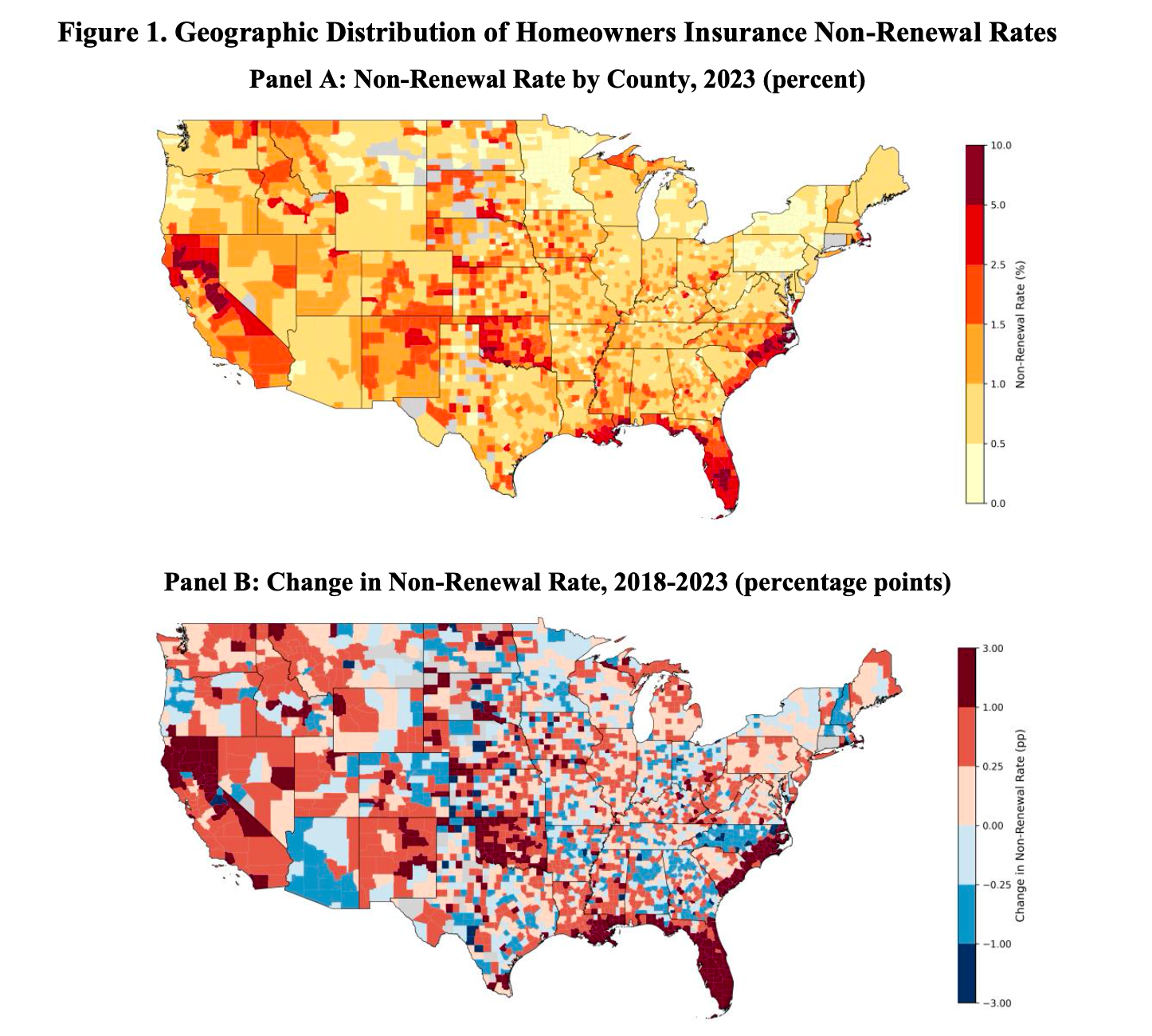
Insurance availability becomes mortgage risk
The critical link is embedded in the mortgage contract itself.
