


MODELS · European Wildfires Are Testing Insurers' Hidden Catastrophe Models
As European wildfires intensify, a new Aon study shows insurers are increasingly relying on proprietary adjustments to shape underwriting, reinsurance and capital decisions. — Read →
MARKETS · ECB Says Climate Risk Is Moving Beyond What Financial Models Can Reliably Price
As banks and insurers invest heavily in AI-powered climate analytics, ECB researchers say the underlying risks may be becoming less predictable, not more. — Read →
MODELS · Report Calls on States to Require Insurers to Price Home Mitigation Into Risk Models
A new report argues that home hardening should become a required input into catastrophe models and insurance pricing. — Read →
MARKETS · Interactive Brokers Moves to List Hurricane Risk, Opening Catastrophe Bets to Mainstream Traders
Interactive Brokers is preparing to list hurricane-landfall contracts on a public exchange, handing banks, asset managers and property investors a direct line to catastrophe risk long confined to the insurance market..— Read →
Harvard's Alex Chan Says AI Is Setting Up A New Battle For Risk Markets
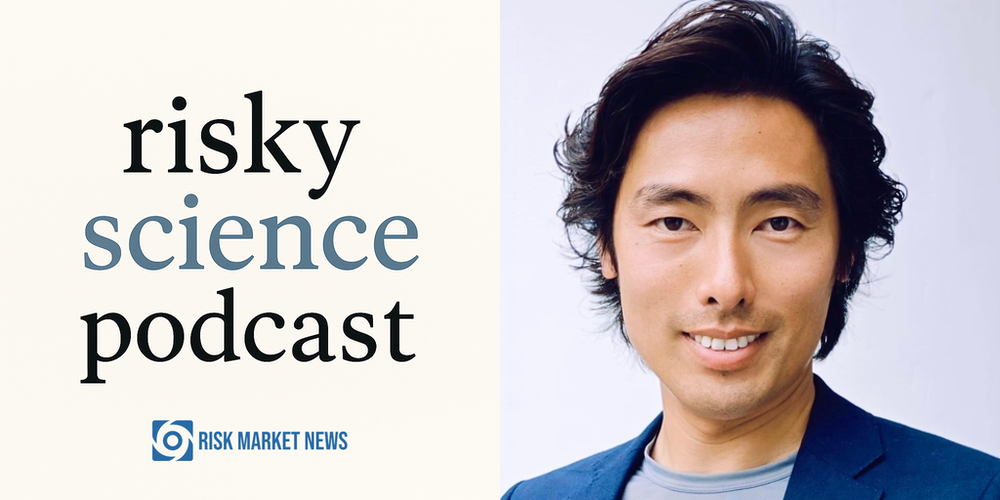
Artificial intelligence is poised to change far more than how insurers price policies... it could redefine who competes to manage risk in the first place.
In the latest episode of the Risky Science Podcast, Harvard Business School professor Alex Chan argues that AI is shifting insurance away from its traditional focus on risk classification toward what he calls "risk design" by using predictive technology not just to identify losses, but to prevent them before they occur.
That distinction could have profound implications for insurers, reinsurers, technology companies and investors by shifting the sector's profit paradigm.
For decades, competitive advantage in insurance has centered on underwriting expertise, distribution and balance sheet strength. Chan argues AI introduces a new dimension: the ability to combine prediction, intervention and continuous feedback to reduce losses rather than simply finance them.
"The future insurer," he suggests, will increasingly compete on its ability to close the loop between prediction, prevention, verification and financing.
His thesis also challenges a common assumption that better AI simply leads to better insurance outcomes. Chan explains how successful prevention programs can create new adverse selection problems by attracting customers who benefit most from those interventions, potentially discouraging insurers from adopting them without changes in pricing and market design.
The conversation also explores whether technology companies could eventually become significant competitors in risk markets, how reinsurers may evolve into providers of risk-management infrastructure as well as capital, and why insurance balance sheets remain indispensable even as AI improves prediction.
As Chan puts it, artificial intelligence may reduce expected losses, but "someone still has to hold the tail."
For investors, the discussion raises a broader strategic question: as AI becomes embedded in underwriting, claims management and risk mitigation, will competitive advantage belong to companies with the largest balance sheets or those that become the operating systems for managing risk?
Watch the full Risky Science conversation with Alex Chan for a deeper discussion of AI, insurance, reinsurance and the future competitive landscape for global risk markets.
🎧 Listen to the audio podcast
