


How Venezuela’s Political Fate Played Out In an Insurance, Oil Industry Legal Battle
A Lloyd’s-backed insurance lawsuit over Venezuelan crude reveals how modern sovereign risk is increasingly migrating onto insurers’ and investors’ balance sheets.
California Launches First-of-Its-Kind AI Catastrophic Risk Disclosure Regime
California has begun enforcing its landmark AI safety law, requiring developers of the most powerful models to publicly disclose how they identify and manage catastrophic risks ranging from mass harm to loss of human control.
TPG/Jackson $650M Deal Tests Investor Appetite for Insurance-Alt Manager Convergence
TPG’s deal with Jackson Life was generally welcomed by investors, but analysts are starting to question what’s under the hood.
Report Urges National Technology Effort as Wildfire Risk Outpaces Current Systems
A new report warns that wildfire losses are outpacing current risk-management systems, urging a coordinated national effort to move technologies from pilot to scale.
New Legislation Seeks to Force More Florida Residential and Commercial Policies Out of Citizens
The Trump-aligned lawmaker’s proposal would accelerate Florida’s ongoing push to shift insurance risk into the private market.
Research Argues More Hurricane Models Means Higher Premiums
Disagreement among approved hurricane models, not higher expected losses alone, is pushing Florida homeowners insurance premiums higher, according to new regulator research
Models Are Shaping Structure (More Than Price) as Capital Moves Up the Catastrophe Stack

-
Models still matter, but not for price. In a capital-rich market, catastrophe models are shaping coverage structure rather than constraining pricing.
-
Higher attachments have shifted loss sharing. Structural changes since 2023 have reduced reinsurers’ modeled share of catastrophe losses despite elevated insured losses.
-
Secondary perils now drive volatility. Wildfire and severe convective storms dominate modeled outcomes below attachment points, increasing cedent earnings volatility.
-
Capital markets are validating models. Strong cat bond and sidecar performance has reinforced confidence in modeled diversification assumptions.
Catastrophe models remained central to market decision-making across the traditional January 1 reinsurance renewals, but in a materially different way than during the hard-market years of 2023 and 2024.
Rather than serving as a constraint on price, modeled risk is increasingly shaping catastrophe program structures, trigger design, and loss thresholds, reflecting a market reality in which abundant capital has reduced pricing pressure.
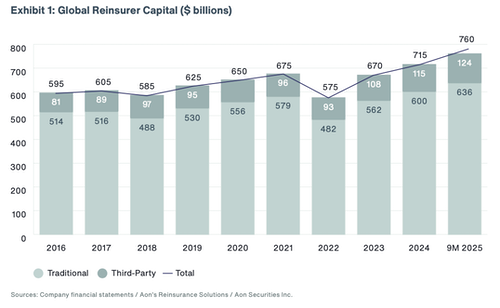
All three major renewal reports released in recent weeks converge on the same conclusion: models still matter, but they are no longer driving scarcity.
Higher attachments reshape modeled loss sharing
The core change across the market is structural rather than analytical, shaped by a broad consensus that the catastrophe reinsurance cycle has turned.


